


How to Create Your Own Online School
Today, opening your own online school has become much easier than it was just a few years ago. An online school allows teachers, experts and educational organizations to teach students around the world, automate payment acceptance and create a stable source of income. With a professional approach, launching your own school takes little time and does not require initial investment. In this article, we show how to do it.

Step 1. Find an In-Demand Learning Topic
The success of an online school begins with choosing the right educational niche. Courses work best when they help people get a new profession, improve qualifications, master an in-demand skill or solve a specific practical problem.
When choosing a topic, pay attention to professional skills and digital technologies, foreign languages, exam preparation, business and management, creativity, design and marketing, and the use of artificial intelligence in different professions.
Study user search queries, popular videos, professional communities and educational platforms. The more precisely a course solves a student problem, the higher the chance of successful sales. Use major education platforms, YouTube, Udemy, Coursera, Skillshare, Google Trends, Google Keyword Planner, Yandex Wordstat and other services to understand which topics users search for most often.
Step 2. Register Your School Domain
The next step is registering your own domain name. A short and memorable address increases trust in the educational organization and helps build your own brand.
International domains such as .com, .net and .org can be registered through registrars such as Namecheap, GoDaddy, Porkbun or Cloudflare Registrar. If you plan to work mainly in one country, it also makes sense to register a national domain such as .ru, .de, .fr, .uk, .il, .pl or another domain that matches your market. Your own domain increases student trust, helps develop the brand and makes your school look more professional.
Step 3. Create a Presentation Website
An informational website does not have to be complicated, but it should be attractive and beautiful. A few modern pages are enough to describe your school, teachers, learning benefits, course programs and contact options. A strong homepage increases the trust of potential students and helps increase registrations.
You do not need programming knowledge to create such a site. You can use a ready-made CMS or website builder. Popular options include WordPress, Webflow, Wix, Squarespace, Joomla and Drupal. They make it easy to add texts, images, videos and articles.
Step 4. Publish Courses in iEdemy
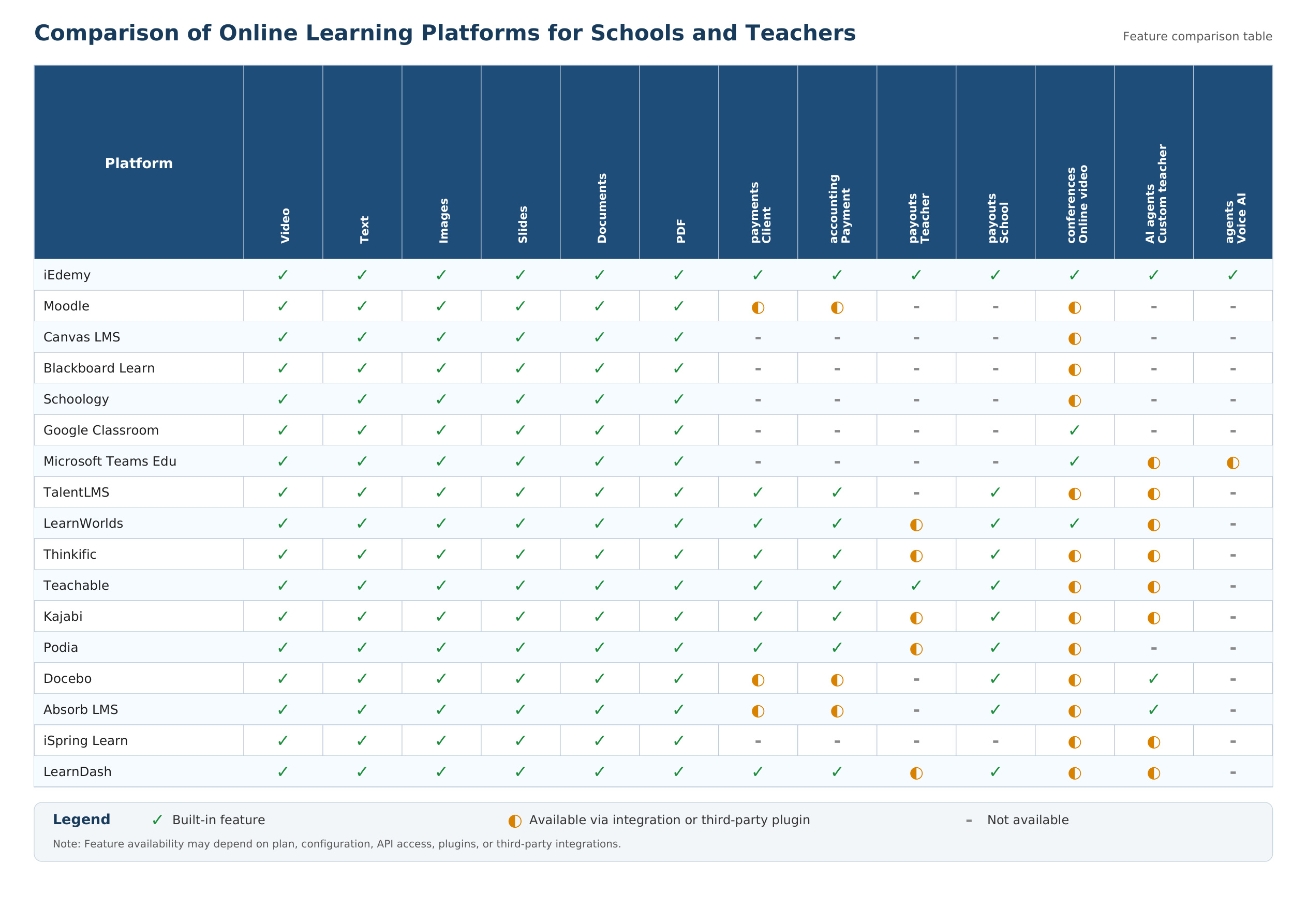
The next step is creating the courses themselves on the iEdemy platform. It is a modern integrated educational ecosystem that combines all the tools needed to organize distance learning in one service.
With iEdemy, you get course content creation and publishing, a secure registration and access management system, international payment acceptance, automatic access after payment, webinars and video conferences, group and individual chats, support for AI agents trained on your course program, and tools for analytics and learning support.
As a result, the teacher does not need to integrate many different services independently. All the main functions are already combined in one educational platform.
Step 5. Embed Courses on Your Own Site
After a course is created, it can be easily embedded into your own website using iframe technology. As a result, learning takes place directly on your domain, while all iEdemy platform features - access management, learning, video conferences, AI agents, payment acceptance and student support - continue to work inside your site.
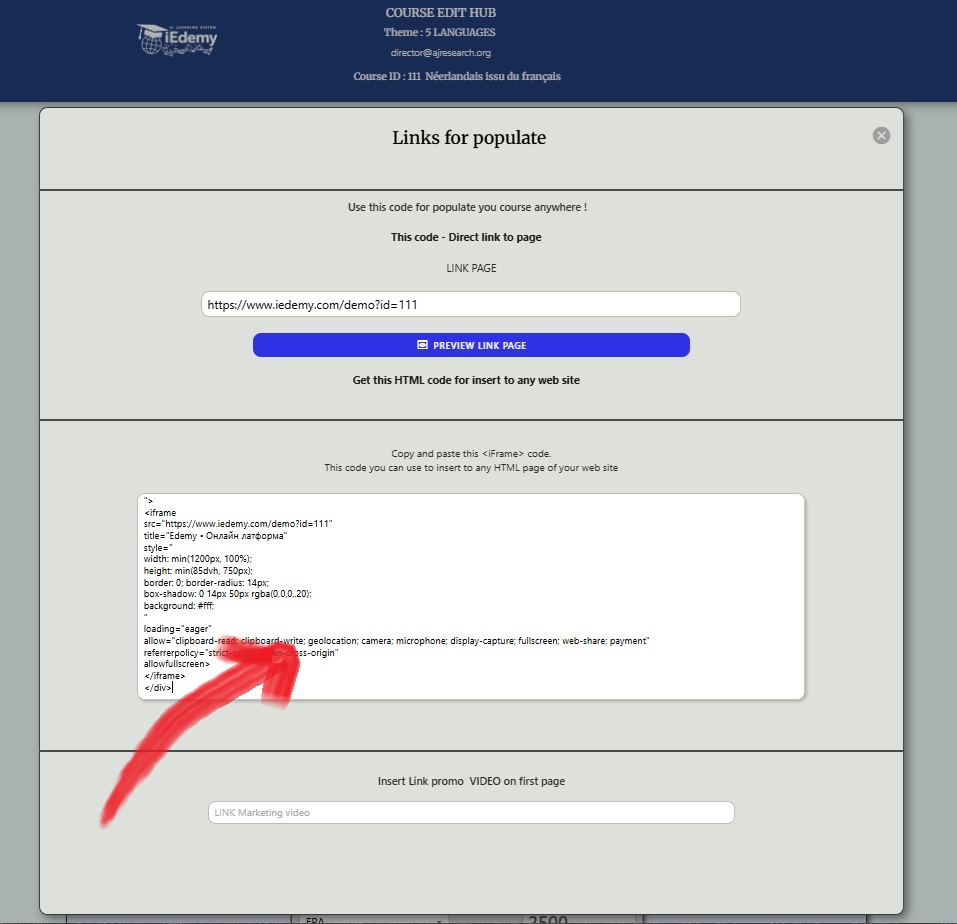

The student understands that they are on your site, which increases the authority of your school. Built-in system tools also allow you to calculate and pay your teachers and allocate the amounts owed to your school from course payments.
Conclusion
Creating your own online school has become accessible to almost every teacher or educational organization. It is enough to choose an in-demand topic, register a domain, prepare a site and publish courses on the modern iEdemy educational platform.
Using the iEdemy ecosystem allows you to significantly reduce project launch time, automate most processes and focus on what matters most - creating high-quality educational programs and developing your own school.